

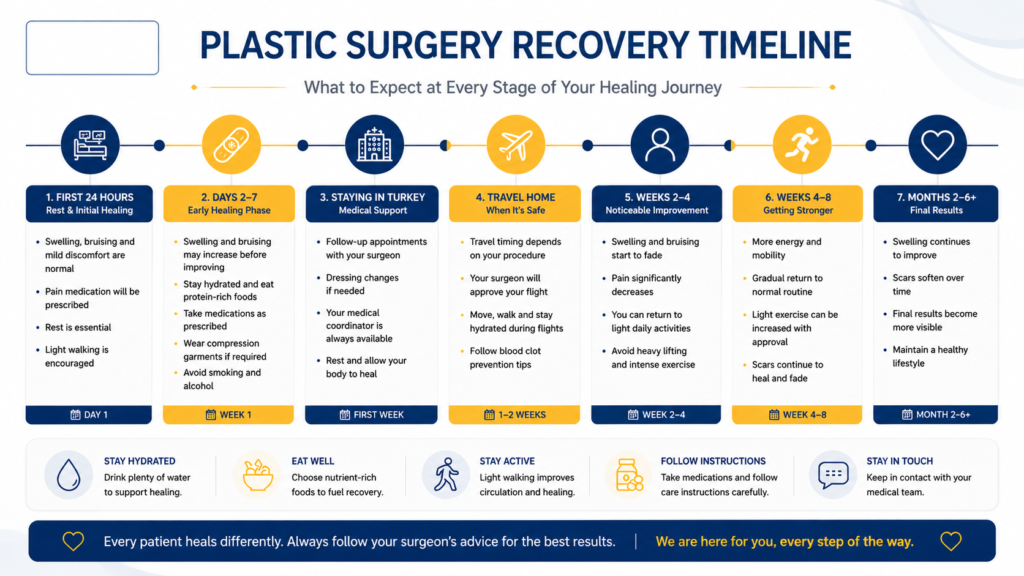
Plastic Surgery Recovery Timeline is a critical part of achieving the best possible results. While the procedure itself is performed in a few hours, the healing process continues for weeks and sometimes months. For international patients traveling to Turkey, understanding what happens after surgery is just as important as choosing the right clinic and surgeon.
Turkey has become one of the world’s leading destinations for cosmetic procedures, attracting patients from the UK, Europe, and the Middle East. High-quality hospitals, experienced surgeons, and structured medical tourism services make the country a trusted choice. However, one of the most overlooked parts of the journey is recovery planning.
This guide explains the full recovery timeline, from the first 24 hours after surgery to long-term healing once you return home.
Why Recovery Matters After Plastic Surgery
Recovery is not just a waiting period; it is an active healing process where your body repairs tissue, reduces swelling, and adapts to surgical changes. Proper recovery significantly affects final results.
Following medical instructions carefully helps:
- Reduce swelling and bruising
- Prevent complications
- Improve scar healing
- Support long-term aesthetic results
- Speed up overall recovery
For international patients, recovery planning also includes travel timing, hotel stay, and post-operative communication with the clinic.
Why Patients Choose Turkey for Surgery
Turkey has become a global hub for medical tourism due to several key advantages. Patients often choose Turkey because of:
- Highly experienced plastic surgeons
- Modern hospitals and accredited clinics
- Affordable treatment compared to Europe and the UK
- Short waiting times
- Full medical tourism packages
Most clinics also provide airport transfers, hotel accommodation, and dedicated patient coordinators to support recovery during the first days after surgery.
Preparing for Recovery Before Surgery

Before travelling to Turkey, patients should discuss their complete medical history with their surgeon and make sure they fully understand both the procedure and the recovery process. The World Health Organization (WHO) highlights that informed patients who actively participate in their care generally experience safer healthcare outcomes.
Recovery starts before the operation itself. Proper preparation can significantly improve healing outcomes.
Patients are usually advised to:
- Stop smoking before surgery
- Avoid blood-thinning medications if instructed
- Prepare loose and comfortable clothing
- Arrange time off work
- Plan accommodation in Turkey
- Organize post-surgery support
Mental preparation is also important. Patients should understand that swelling and bruising are normal during early recovery stages.
First 24 Hours After Surgery
The first day after surgery is the most sensitive stage of recovery. Patients are monitored closely in the clinic or hospital depending on the procedure.
Common symptoms include:
- Swelling
- Bruising
- Fatigue
- Mild pain or discomfort
- Tightness in treated areas
Pain medication is usually prescribed to manage discomfort. Light walking is often encouraged to improve circulation and reduce the risk of blood clots.
At this stage, rest is the priority.
Days 2–7: Early Healing Phase
During the first week, the body begins the active healing process. Swelling and bruising may temporarily increase before gradually improving.
Patients are advised to:
- Stay hydrated
- Eat protein-rich meals
- Take prescribed medication regularly
- Avoid smoking and alcohol
- Wear compression garments if required
- Walk lightly several times a day
This phase can feel uncomfortable, but it is a normal part of healing.
Staying in Turkey After Surgery
Most international patients remain in Turkey for several days after their procedure. This allows surgeons to monitor early healing progress before approving travel.
During this period:
- Dressing changes may be performed
- Follow-up checks are scheduled
- Recovery instructions are reviewed
- Patients can contact their medical coordinator easily
This structured support system is one of the key advantages of having surgery in Turkey.
When Can You Travel Home?
Flying after surgery should always be approved by your surgeon. Long flights may increase the risk of deep vein thrombosis (DVT), especially after major procedures. The Centers for Disease Control and Prevention (CDC) also recommends taking precautions during long-distance travel to help reduce the risk of blood clots.
The timing depends on:
- Type of procedure
- Patient health condition
- Swelling level
- Risk of complications
- Surgeon’s recommendation
Long flights may increase the risk of blood clots, so proper precautions are necessary. Patients are always advised not to travel until they receive medical clearance.
Weeks 2–4: Noticeable Improvement Stage
During this phase, most patients begin to feel significantly better. Swelling and bruising gradually decrease, and mobility improves.
Typical experiences include:
- Reduced pain
- Better mobility
- Visible reduction in swelling
- Return to light daily activities
However, internal healing is still ongoing. Heavy exercise, lifting, and intense physical activity should still be avoided.
Returning Home After Surgery
Recovery continues even after returning home. Patients should carefully follow aftercare instructions provided by their surgeon.
Most clinics offer:
- Online consultations
- Photo follow-ups
- Messaging support
- Recovery guidance
If any concerns arise, patients should seek local medical assistance and inform their surgical team.
Managing Swelling and Bruising
Swelling is one of the most common parts of plastic surgery recovery. It is completely normal and can last several weeks depending on the procedure.
To help reduce swelling:
- Sleep with elevated head if recommended
- Stay hydrated
- Avoid high salt intake
- Wear compression garments
- Take light walks
Lymphatic drainage massage may be recommended in some cases to help reduce swelling and improve comfort, if approved by your surgeon.
Bruising also fades gradually as the body heals naturally.
Nutrition and Healing

Proper nutrition plays a major role in recovery speed and quality.
Recommended foods include:
- Lean protein (chicken, fish, eggs)
- Fresh vegetables
- Fruits
- Whole grains
- Healthy fats
Protein is especially important for tissue repair and regeneration. Hydration is equally essential during all stages of recovery.
Sleeping After Surgery
Sleeping position can directly affect the plastic surgery recovery results.
Examples:
- Rhinoplasty patients often sleep with the head elevated.
- Breast surgery patients usually sleep on their back.
- Liposuction patients may need additional pillows for support.
- Abdominoplasty patients are often advised to sleep in a V-shaped position.
- BBL patients are usually advised to sleep on their stomach.
Patients should avoid pressure on treated areas until cleared by their surgeon.
Returning to Exercise
Light walking is encouraged early in recovery, but full exercise routines should be resumed gradually.
General timeline:
- Light walking: immediately after surgery
- Light activity: after 2–3 weeks
- Full exercise: after surgeon approval
Overexertion may delay healing and increase swelling.If you are considering plastic surgery in Turkey, proper recovery planning is just as important as choosing the right procedure. Our medical team at Good Medicare provides full support before, during, and after your treatment to ensure a safe and smooth journey.
How long does plastic surgery recovery take?
Recovery depends on the procedure but usually takes several weeks for initial healing and months for final results.
When can I fly after plastic surgery?
It depends on the procedure, but most patients are cleared after a few days to two weeks.
Is swelling normal after plastic surgery?
Yes, swelling is a normal part of the healing process and gradually decreases over time.
When can I return to work?
Most patients return to desk jobs within 1–2 weeks depending on the procedure.
When can I exercise again?
Light walking is allowed early, but full exercise usually requires several weeks.
Is Turkey safe for plastic surgery?
Yes, Turkey is one of the leading countries for medical tourism with accredited clinics and experienced surgeons
Do I need follow-up after returning home?
Yes, most clinics offer online follow-up consultations.
What helps speed up recovery?
Proper nutrition, hydration, rest, and following surgeon instructions are key.