
With summer 2026 just around the corner, are you wondering if you can finally go shirtless at the beach? Many men feel self-conscious because their chest appears more developed than they’d like. Rest assured: enlarged male breasts are incredibly common. Male anatomy is complex and can be sensitive to hormonal shifts or lifestyle factors. In this guide, you’ll learn how to address the issue professionally and what a modern treatment journey looks like so you can reclaim your confidence.
Understanding the Male Chest: The Path to Gynecomastia Surgery
Before any surgeon picks up a scalpel, a professional evaluation is essential. The journey to a flat, masculine chest begins with a thorough consultation. Many men spend years in the gym only to find that their chest tissue remains stubborn. This is where medical expertise comes in.
The Consultation: How the Evaluation Works
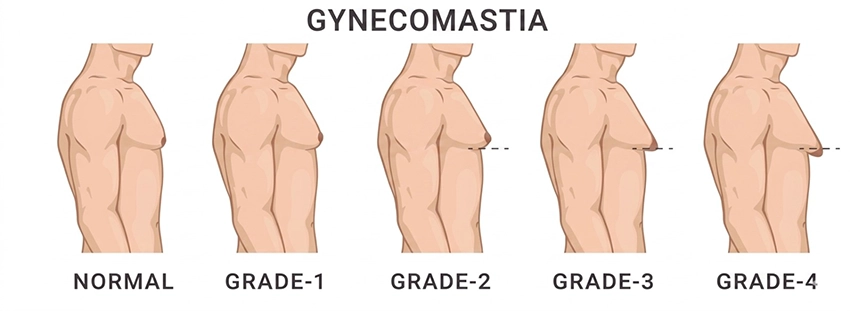
During your initial appointment, the surgeon will physically examine your chest. This is more than just a visual check; it is a manual palpation to feel the texture of the tissue beneath and around the nipple. The goal is to provide a clear diagnosis: Is it Lipomastia (pure fat accumulation, often called “pseudogynecomastia”) or true Gynecomastia (enlarged glandular tissue)?
This distinction is the foundation of your surgical plan. While pure fat can often be removed using modern suction techniques, true glandular tissue—which usually has a firmer, rubbery consistency—requires surgical excision. As confirmed by the official guidelines of the ASPS, an accurate diagnosis is crucial for choosing the right surgical strategy. Following the physical exam, the surgeon will discuss your expectations and determine which technique will yield the best aesthetic result.
Severe (High-Grade) Gynecomastia
In some cases, patients present with high-grade gynecomastia. This involves not only significant glandular growth but often excess skin that has been stretched over the years. In these situations, a Mastectomy (gland excision) is performed. The surgeon removes the entire gland and, if necessary, tightens the skin so the chest lies flat against the pectoral muscle. It is also important to rule out medication-induced gynecomastia beforehand to ensure the results are permanent.
Surgery in Detail: Methods and Techniques
Plastic surgery has evolved rapidly. For 2026, we utilize techniques that are more effective and less invasive than ever before:
Standard Liposuction: Ideal for contouring. Tumescent fluid is injected into the fatty tissue, and the excess is suctioned out through tiny incisions.
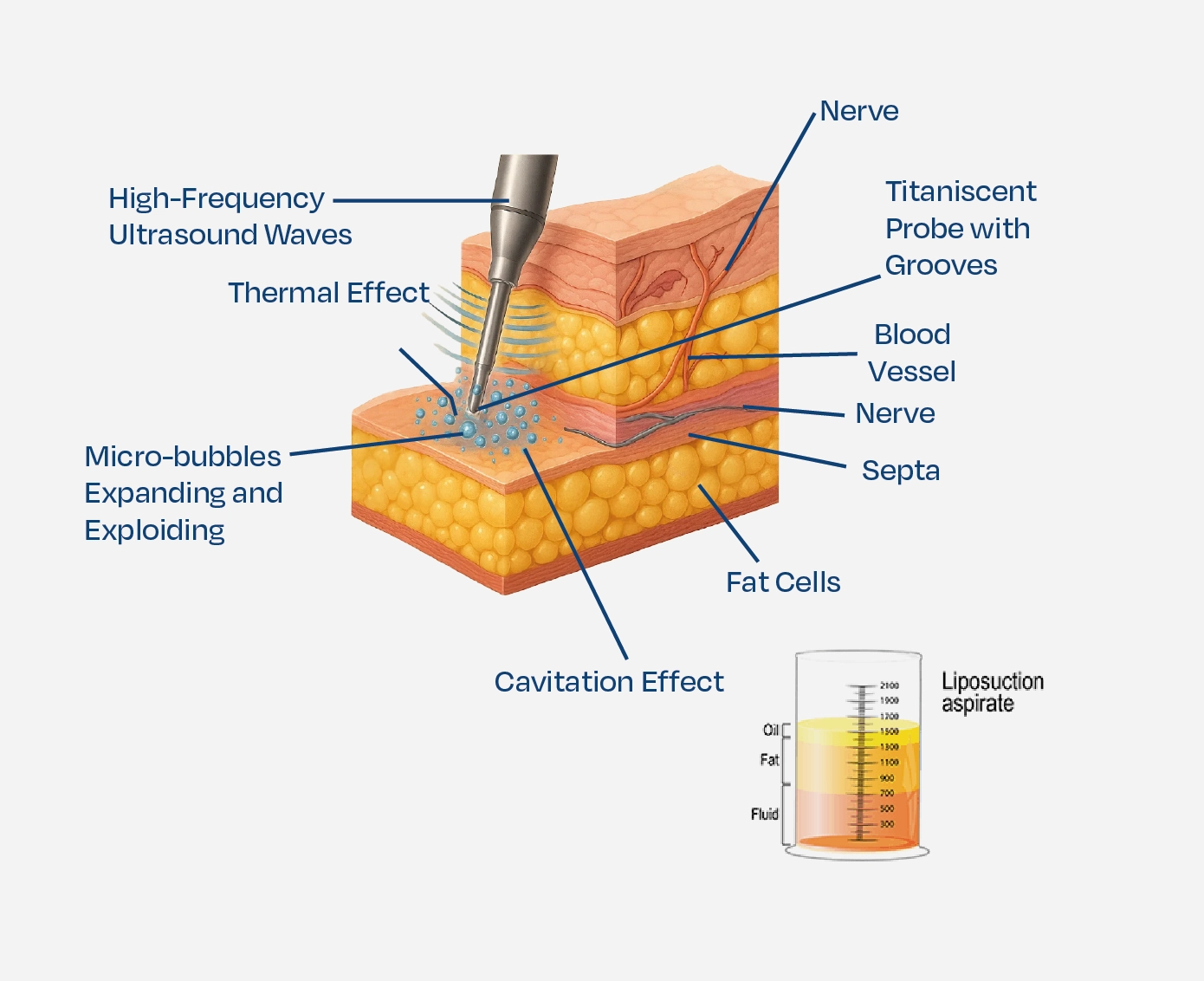
VASER Liposuction (Ultrasound Technology): A state-of-the-art method that uses ultrasound energy to liquefy fat cells while sparing nerves and blood vessels. It provides superior skin retraction and smoother results.
Surgical Excision: For true gynecomastia, the gland must be manually removed. The surgeon makes a small, crescent-shaped incision at the edge of the areola. Because this area is pigmented, the resulting scar is usually virtually invisible once healed.
Recovery: Your Road to a New Silhouette
The quality of your final result depends heavily on following post-operative instructions. Immediately after surgery, you will be fitted with a professional medical compression garment.
This vest is your most important tool for the coming weeks. It applies even pressure, preventing fluid buildup (seroma) and helping the skin adhere firmly to the new, flat chest contour. While the first few days may feel like intense muscle soreness, most patients are pain-free within 3 to 5 days.
Summary: Planning Your Surgery in Turkey for 2026
Choosing to have gynecomastia surgery in Turkey is a popular choice for international patients. Turkey is a world leader in aesthetic surgery, offering top-tier clinics and highly experienced surgeons.
Your Turkey Travel Itinerary:
Plan for a trip of approximately 6 to 7 days:
Arrival & Check-up: Meet your surgeon for the final consultation and diagnosis (Fat vs. Gland).
- Surgery Day: The procedure is performed under general anesthesia. You will typically stay one night in the hospital for monitoring
Hotel Recovery: Spend the remaining 4 to 5 days at a nearby hotel. You will have follow-up appointments to check the healing progress before flying home.
By choosing a professional approach, you are investing in your quality of life. With a clear diagnosis and the right surgical team, nothing stands in the way of a confident summer 2026.
Gynecomastia vs. Lipomastia: Comparison Table
| Feature | True Gynecomastia | Lipomastia (Pseudogynecomastia) |
| Cause | Growth of breast gland tissue | Accumulation of fatty tissue |
| Texture | Firm, rubbery core behind the nipple | Soft, uniform like body fat |
| Pain/Sensitivity | Can be tender or sensitive | Usually completely painless |
| Diet/Exercise | Little to no change with weight loss | Can be reduced through fat loss |
| Surgical Approach | Gland excision required | Liposuction is often sufficient |
FAQ
Prices in Turkey are highly competitive. In 2026, packages typically start from $2,000 and below, depending on whether you need simple liposuction or a combined gland excision.
You should plan for about 6 days. This includes the pre-op check, the surgery, and the critical first few days of recovery and follow-up in the hotel.
Initial healing takes about 4 weeks. However, you should wait until the 8th week to resume heavy weightlifting or chest exercises to ensure the internal tissues have fully stabilized.
The main methods are standard liposuction, VASER liposuction (ultrasound-assisted), and surgical excision (gland removal).
Ideally, you should wear the compression for 6 to 8 weeks. It is essential for ensuring the skin retracts smoothly and doesn’t sag.